
Sarcoma
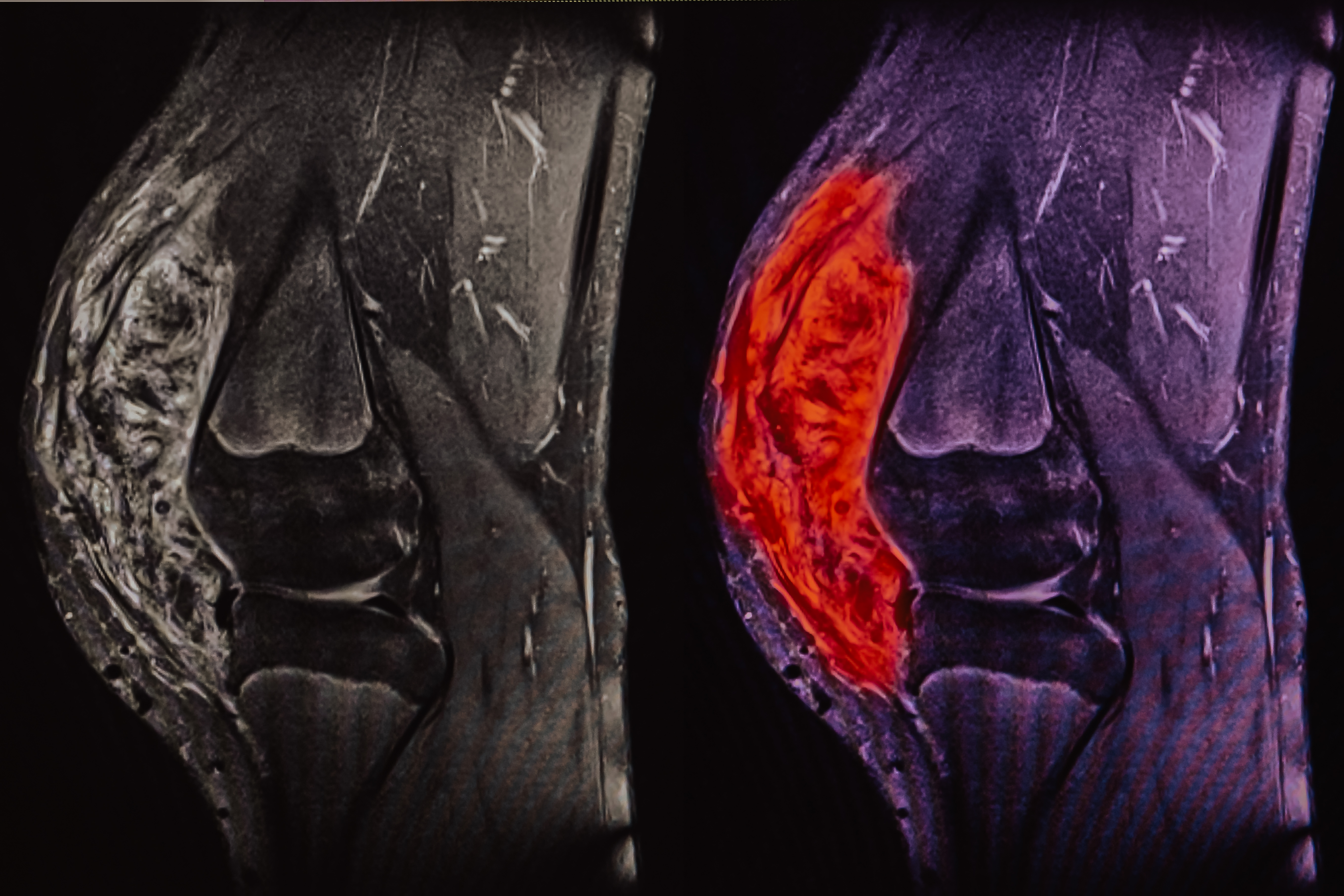
At West Cancer Center, sarcomas are treated using a team-based approach. Our specialists work together to provide personalized care for patients diagnosed with sarcoma, a rare type of cancer that develops in the body’s connective tissues, including bones, muscles, fat, and other soft tissues. Because every patient and diagnosis is unique, our team develops an individualized treatment plan focused on expert, compassionate care and the best possible outcomes.
Liposarcoma
Starts in fat cells, often in the thighs or abdomen.
Risk Factors
• Most cases have no known cause
• Prior radiation exposure
• Rare inherited cancer syndromes
Common Symptoms
• Growing, usually painless mass
• Abdominal swelling or pain
• Feeling full quickly
• Pressure symptoms
Diagnosis
• MRI for tumors in the arms or legs
• CT for abdominal tumors
• Core biopsy
• Pathology and molecular testing
Treatment Options
• Complete surgical removal when possible
• Radiation therapy
• Systemic therapy, based on:
• Tumor subtype
• Location
• Risk of recurrence
• Metastatic disease
Leiomyosarcoma
Grows in smooth muscle, such as the uterus or digestive tract.
Risk Factors
• Most cases are sporadic
• Prior radiation exposure
• Rare inherited cancer syndromes
Common Symptoms
• Growing mass
• Pain
• Abdominal fullness
• Abnormal uterine bleeding, depending on the tumor location
Diagnosis
• CT or MRI
• Core biopsy or surgical pathology
• Chest imaging for staging
Treatment Options
• Surgery for localized disease
• Radiation therapy
• Chemotherapy or other systemic therapy for selected
Gastrointestinal Stromal Tumor (GIST)
Forms in the wall cells of the digestive tract.
Risk Factors
• Acquired KIT or PDGFRA mutations
• Rare familial syndromes
• NF1
• SDH deficiency
Common Symptoms
• Abdominal pain or fullness
• Gastrointestinal bleeding
• Anemia
• Nausea
• Feeling full quickly
• Abdominal mass
Diagnosis
• CT imaging
• Endoscopy or endoscopic ultrasound, when appropriate
• Biopsy
• KIT, PDGFRA, or other molecular testing
Treatment Options
• Surgery for resectable tumors
• Tyrosine kinase inhibitors, such as imatinib
• Related targeted therapies for high-risk or advanced disease
Rhabdomyosarcoma
Begins in skeletal muscle tissue and mostly affects children.
Risk Factors
• Most cases have no known cause
• Rare inherited syndromes, including:
• Li-Fraumeni syndrome
• DICER1 syndrome
• NF1
Common Symptoms
• Growing lump or swelling
• Pain
• Bleeding
• Urinary or bowel symptoms
• Eye or nasal symptoms, depending on the tumor location
Diagnosis
• MRI or CT
• Biopsy
• Chest and other staging imaging
• Pathology and molecular testing
Treatment Options
• Chemotherapy
• Surgery and/or radiation therapy
• Multidisciplinary care through a sarcoma team
Angiosarcoma
Develops in the lining of blood or lymph vessels.
Risk Factors
• Prior radiation exposure
• Chronic lymphedema
• Certain chemical exposures
• Some inherited cancer syndromes
Common Symptoms
• Rapidly enlarging bruise-like or purple skin lesion
• Swelling
• Pain
• Bleeding
• Symptoms caused by a mass in an internal organ
Diagnosis
• MRI or CT
• Biopsy
• Expert sarcoma pathology review
• Additional imaging for staging
Treatment Options
• Surgery
• Radiation therapy
• Chemotherapy
• Targeted therapy
• Immunotherapy, depending on:
• Tumor location
• Resectability
• Stage
Synovial Sarcoma
Develops near joints and tendons.
Risk Factors
• Usually caused by an acquired SS18-SSX gene fusion
• No well-established lifestyle risk factors
Common Symptoms
• Slow-growing deep lump near a joint
• Pain or tenderness
• Limited movement
• Chest symptoms
Diagnosis
• MRI
• Core biopsy
• Molecular testing for SS18 rearrangement
• Chest imaging
Treatment Options
• Surgery, often with radiation therapy
• Chemotherapy
Undifferentiated Pleomorphic Sarcoma (UPS)
Forms in soft tissue, commonly in the arms or legs.
Risk Factors
• Older age
• Prior radiation exposure
• Rare inherited cancer syndromes
• Many cases have no known risk factor
Common Symptoms
• Rapidly enlarging painless or painful mass
• Mass in an arm or leg
• Symptoms from a deep abdominal tumor
Diagnosis
• MRI or CT
• Core biopsy
• Expert pathology review
• Chest imaging for staging
Treatment Options
• Wide surgical excision
• Radiation therapy
• Sometimes chemotherapy or immunotherapy, based on:
• Tumor size
• Location
• Risk level
• Metastatic disease
Osteosarcoma
Starts in bone-forming cells and frequently affects teenagers and young adults.
Risk Factors
• Adolescence and rapid bone growth
• Prior radiation exposure
• Paget disease of bone
• Hereditary retinoblastoma
• Li-Fraumeni syndrome
Common Symptoms
• Persistent bone pain
• Swelling
• Mass
• Limp
• Reduced joint movement
• Pathologic fracture
Diagnosis
• X-ray
• MRI
• Chest CT
• Bone imaging or PET imaging
• Carefully planned biopsy
Treatment Options
• Chemotherapy
• Complete surgical removal, often with limb-sparing surgery
• Radiation therapy in selected cases
Chondrosarcoma
Develops in cartilage cells.
Risk Factors
• Older age
• Cartilage tumors, such as:
• Enchondromas
• Osteochondromas
• Ollier disease
• Maffucci syndrome
Common Symptoms
• Progressive bone pain
• Swelling or mass
• Reduced movement
• Fracture
Diagnosis
• X-ray
• MRI or CT
• Planned biopsy
• Expert bone-tumor pathology review
• Chest imaging
Treatment Options
• Surgery is the main treatment
• Radiation therapy for selected cases
• Subtype-specific systemic therapy for selected unresectable or aggressive disease
Ewing Sarcoma
Can grow in bones or nearby soft tissues and often affects children and teenagers.
Risk Factors
• Most often occurs in children and young adults
• Driven by an acquired EWSR1-related gene fusion
• No clear lifestyle-related risk factors are known
Common Symptoms
• Bone or soft-tissue pain
• Swelling
• Mass
• Fever
• Fatigue
• Fracture
Diagnosis
• X-ray
• MRI
• Biopsy with molecular confirmation
• Chest CT
• PET or bone staging
Treatment Options
• Multi-agent chemotherapy
• Surgery and/or radiation therapy for local tumor control