
Skin Cancer
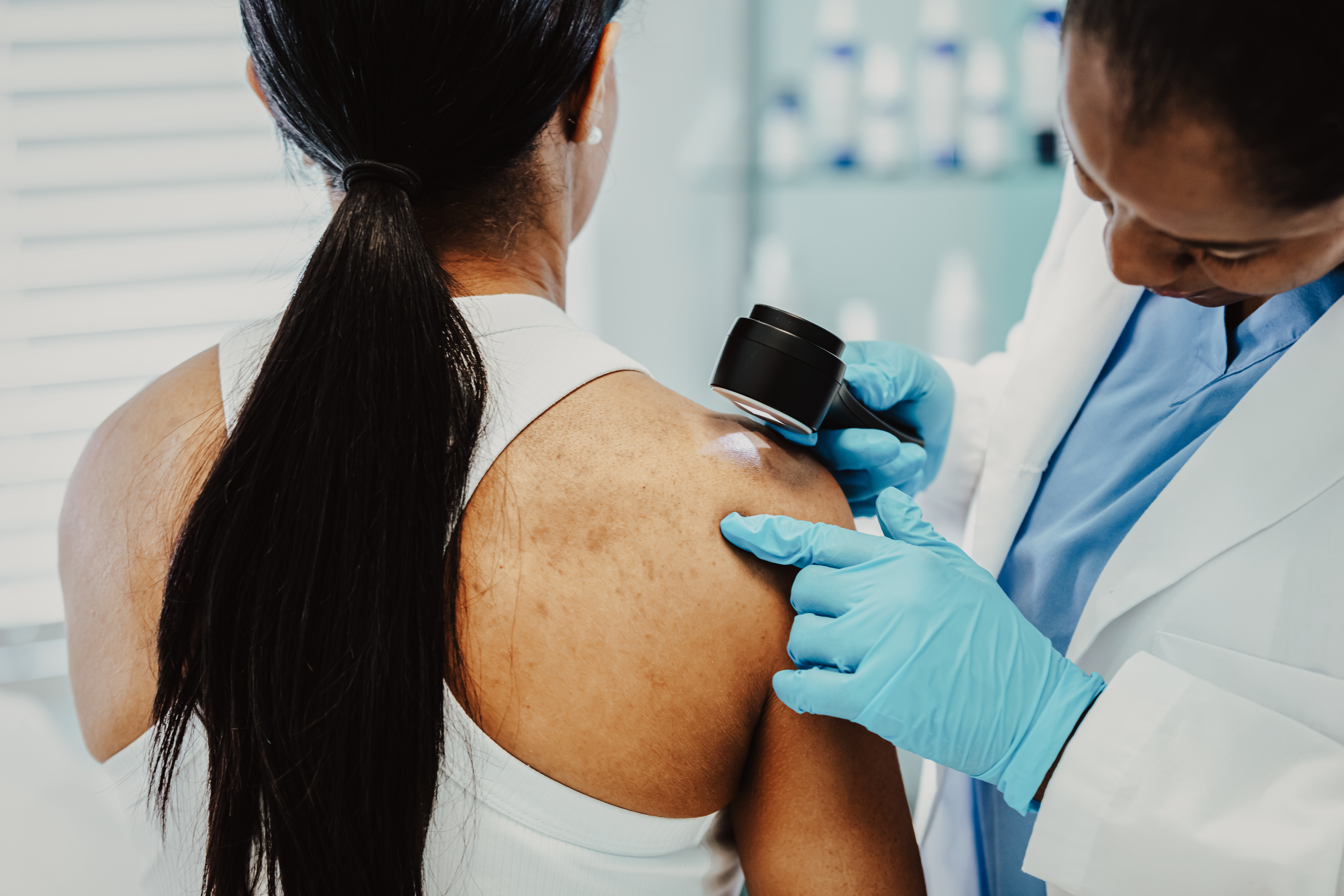
At West Cancer Center, skin cancers are treated using a team-based approach. Our specialists work together to provide personalized care for patients diagnosed with skin cancer, including basal cell carcinoma, squamous cell carcinoma, melanoma, and other skin cancers. Because every patient and diagnosis is unique, our team develops an individualized treatment plan focused on expert, compassionate care and the best possible outcomes.
Basal Cell Carcinoma (BCC)
The most common form of skin cancer. It grows slowly on sun-exposed areas, such as the head and neck, and often appears as a pearly or pink bump. It rarely spreads but can damage nearby tissue if left untreated.
Risk Factors
• Cumulative ultraviolet (UV) exposure
• Fair skin
• Tendency to burn or freckle
• Older age
• Prior radiation exposure
• Immune suppression
• Rare inherited cancer syndromes
Common Symptoms
• Pearly or shiny bump
• Pink patch
• Nonhealing sore
• Scar-like area
• Lesion that repeatedly bleeds or crusts
Diagnosis
• Skin examination
• Dermoscopy, when useful
• Skin biopsy
Treatment Options
• Surgical excision
• Mohs surgery
• Curettage and electrodesiccation
• Selected topical treatments
• Radiation therapy
• Targeted therapy for rare advanced cases
Squamous Cell Carcinoma (SCC)
The second most common type of skin cancer. It forms in the upper layer of the epidermis and often appears as a rough, scaly, or firm red sore that may bleed. It generally grows faster than BCC and is more likely to spread if untreated.
Risk Factors
• Chronic UV exposure
• Fair skin
• Immune suppression
• Prior radiation exposure
• Chronic wounds or scars
• HPV at certain sites
• Tobacco use, particularly for lip SCC
Common Symptoms
• Rough or scaly red patch
• Firm, growing bump
• Crusted or bleeding sore
• Nonhealing ulcer
• Tender skin lesion
Diagnosis
• Skin examination
• Skin biopsy
• Lymph-node assessment or imaging for high-risk tumors
Treatment Options
• Surgical excision
• Mohs surgery
• Selected local treatments
• Radiation therapy
• Immunotherapy for advanced or unresectable disease
Melanoma
Starts in pigment-producing cells called melanocytes. It is less common than BCC or SCC but is more aggressive because it can spread to other organs. It often appears as an unusual or changing mole.
Risk Factors
• UV exposure and sunburns
• Fair skin
• Many or atypical moles
• Personal history of melanoma
• Family history of melanoma
• Certain inherited mutations
Common Symptoms
• New or changing mole or spot
• Asymmetry
• Irregular borders
• Multiple colors
• Increasing size
• Itching
• Bleeding
Diagnosis
• Full skin examination
• Skin biopsy
• Sentinel lymph-node biopsy in selected cases
• Imaging when appropriate
• BRAF testing to help guide treatment
Treatment Options
• Wide local excision
• Sentinel lymph-node surgery, depending on stage
• Immunotherapy
• BRAF/MEK targeted therapy
• Radiation therapy
• Other systemic therapies, based on stage and tumor features
Merkel Cell Carcinoma
A rare, fast-growing cancer that often appears as a firm, painless red or bluish-purple nodule on sun-exposed skin.
Risk Factors
• Older age
• Chronic UV exposure
• Fair skin
• Immune suppression
• Merkel cell polyomavirus
Common Symptoms
• Rapidly growing bump
• Firm, painless nodule
• Red, purple, or skin-colored lesion
• Lesion on sun-exposed skin
Diagnosis
• Skin biopsy
• Lymph-node examination
• Sentinel lymph-node biopsy, when appropriate
• CT or PET imaging for staging
Treatment Options
• Surgery
• Often radiation therapy
• Immunotherapy for unresectable, recurrent, or metastatic disease
Other Rare Forms
Include sebaceous carcinoma, Kaposi’s sarcoma, and dermatofibrosarcoma protuberans. These cancers originate from different specialized cells or tissues in the skin.
Risk Factors
• Depend on the specific subtype
• UV exposure
• Immune suppression
• Prior radiation exposure
• Chronic inflammation
• Viral infection
Common Symptoms
• Persistent or enlarging nodule
• Plaque
• Sore
• Skin color change
• Bleeding lesion
• Other unusual skin growth
Diagnosis
• Dermatologic examination
• Skin biopsy
• Specialized pathology review
• Imaging and testing tailored to the specific tumor
Treatment Options
Treatment depends on the subtype and may include:
• Surgery
• Mohs surgery
• Radiation therapy
• Targeted therapy
• Chemotherapy
• Immunotherapy